Weekend in the country

I have been lucky enough over the years to have had many weekend breaks in different parts of the world. Ones that spring to mind include a stag weekend in Stockholm, an NYC break when I was living in the US and a jaunt to Paris on the Eurostar. The usual format, as I am sure many of you will be able to empathise with, is as follows: journey to the location, carefully balancing the excitement of a greater distance vs the tedium of a Friday journey for just a weekend; settle into where you are staying as quickly as possible, again balancing the familiar home comforts with new discoveries; pack as much activity into the weekend as possible but at the same time allow for the fact you will be back at work next week and hence need some down time; and, finally, travel back home, ideally completed as quickly as possible with the minimum of fuss and delay.

Well, if Zambian weekends are all like the one I have just experienced, then I may have just found the Carlsberg of weekend formats. It would have been crazy to come all this way for two months of work in Lusaka without seeing a little of the touristy side to Zambian life and, with the help of a couple of friends, a trip to the Lower Zambezi was thus arranged. Friday saw me board a plane at Lusaka airport; not only did I turn left however, I sat in the co-pilot’s seat, just the first of many examples this weekend where a health and safety executive hasn’t yet managed to have any influence thank heavens (I am still scarred from the ‘you should consider requiring torchbearers to wear flame proof suits’ and ‘you must request permission of every hotel on the relay to keep the flame there overnight’ advice – how did we cope without them?!). And what a flight too: views of the hills, the mighty Zambezi and frequent game sightings from the air were followed by a landing at the dirt runway of Jeki, after the impala had been encouraged off the landing strip first.

We then hopped across to the far more sophisticated (it had tarmac and a hut) Royal airport before the short drive to the Chongwe river camp. 45 thrilling minutes from Lusaka and I was in the middle of the Zambian bush. That short transfer was to give me an insight into how far away from Lusaka and how remote we really were, interrupted as we were by elephants, lions and a range of other game. And we weren’t even in the park yet, merely the fringes (called the Game Management Area). Arriving at the camp, I was ushered onto a very pleasant terrace with a bar overlooking the confluence of rivers and given my second glimpse of health and safety, Zambian style: DON’T GET EATEN. Although, in true H&S style, whether this was for my benefit or the harm it might do to the tourist industry should I fail to heed their advice was a moot point.

Via a detour because an elephant had inconveniently decided to take a mud bath in the middle of camp (you would if you could), I was then shown to my tent, a highly luxurious setting considering the circumstances complete with the best shower I have come across in Zambia. As with all good long weekends, the attention to detail was impressive and appreciated. Less familiar was the whistle to attract immediate attention and the radio to call for help, although I suspect these could come in handy in some of the cities I have visited over the years. The weekend continued with simply amazing scenery, game and other wildlife interspersed with fabulous customer service and local knowledge from my hosts at Chongwe. As well as seeing all of the usual big stuff, the highlight had to be the walking safaris. Even though, or perhaps because, we had a scout armed with a rifle that looked like it predated independence, I assure you that you feel alive when you hear a lion roar nearby and aren’t quite sure from which direction it might appear.

Needless to say with all good long weekends, they aren’t long enough. Seemingly shortly after I was unpacking, I was packing once more and heading for the flight home. Not only was I the only passenger, again; not only did I turn left, again; and sit in the co-pilot seat, again; the perfect conclusion was that the journey back only took fifteen minutes (it was a much faster plane I am told). Within 90 minutes of having lunch surrounded by crocs and hippos, and equally incredibly listening to TMS on wifi, I was back at home unpacking once more.

Tourism is big business in Zambia, other than mining perhaps the biggest business. I suspect most tourists to Zambia only see this side to the country which, whilst amazing, does not give you a real perspective of what the country is actually like. Later this month, Zambia hosts the UN WTO (World Tourism Organisation) General Assembly in Livingstone which it clearly considers to be a significant privilege, although without encouraging the sceptics to think about legacy too much I would be intrigued to know what the benefits to Zambia will actually be. Troublingly, Zambia is jointly hosting the Assembly with neighbours Zimbabwe. I understand from my hosts on the western bank of the Zambezi this weekend that adventure tourism trade on the other bank is alive, well and just as exclusive, as well as being terribly helpful both as income and legitimisation for Mugabe. The cynic in me wonders why President Sata, elected here in 2011 in relatively free and fair elections and, initially at least, joyously welcomed by the people of Zambia, would want to work with the regime across the border. Or should a question about scavenging over a carcass be directed to the UN instead?

Posted in 2013

The darker side of Zambia

Anyone who read my last blog will know that I have found much to admire and learn from in Zambia. But that does not mean I have been oblivious to some of the less admirable aspects of life here. There are both mundane daily challenges, such as my bicycle commute where the combination of some drivers’ lack of spatial awareness, brakes that passed their best by date some time in antiquity and an apparently sincere belief that cars have right of way in all circumstances at the expense of pedestrians and cyclists alike, frequently raise my blood pressure. And then there are the far from mundane challenges that blight life, more of which later.

Continuing the humourous and sometimes farcical observations first, anyone who has spent time here in Lusaka will be able to empathise with the following list: the public buses, currently undergoing an expensive transition from blue to white with an orange stripe for no other reason than the government said so, where up to twenty people fit into a vehicle the size of a VW campervan and where legroom and headroom would best suit a pre-pubescent child; the diet, a huge amount of nshima combined with various local vegetables (healthy so far) but then washed down with the most sugar-filled drinks and sweets known to man (what’s the point in healthy eating when everyone has such an acute sense of morbidity?); the abundance, and wastage, of water and plastic, the former used liberally to wash cars, water the grass and even dampen the dust (contradicting my preconception that water was a scarce resource in Africa) whilst the latter lies strewn absolutely everywhere, blighting the landscape, the wildlife and the people – no such thing as a carrier bag policy here; the aforementioned cars, complete with less fuel than required for any journey, with an obligatory broken windscreen, brakes iffy and deteriorating, shock absorbers removed to even up the ride and yet intent on using the wave-esque dirt tracks whenever the traffic backs up, which is always; the drivers themselves, not often displaying signs of having passed a driving test and sometimes, such as the driver who had to place his foot on the brake with his hands and operated the accelerator with his crutch (a disability acquired after a car accident of course) just downright dangerous; the power cuts, often causing water supply issues, which seem to occur just as you are about to dish up food or whilst covered in soap; and finally the Zambian time keeping, at best described as late, at worst as just tomorrow.

Then there is the more sinister side to life here, often challenging the norms that I just take for granted and expected would be obligatory for a Commonwealth country to observe. One of the worst of these, officially at least, and shocking for me in light of the hoo-hah created in the UK by the extradition of Abu Qatada, was the revelation that evidence given under torture is admissible in court, a judgement upheld by the Supreme Court in 2010; added to the existence of the death penalty, police brutality and corruption, and gender and sexual orientation discrimination, human rights legislation, much maligned in the UK, feels disturbingly far away. Even more disturbingly when I first arrived was the discovery that summary justice meted out by the people is far from uncommon; from beatings in the school playground for alleged child thieves, not just ignored but even endorsed by some teachers, to unlawful killings in public, reported and justified on TV, for those old enough to know better (in a country where the criminal age is 8). I can’t remember who said you can tell a lot about a country from the state of its jails; well, one example here in Lusaka is of a jail built for 100, holding 1000, men, women and children together, where sleeping lying down is the prerogative of the strong or permissive. Potentially effective as a deterrent, far from such as a rehabilitation tool, the justice ministry has a lot to work on.

Just as perniciously for the rule of law and hence the likelihood of and propensity to development, what could at its best be described as reliance upon charity and at its worst as downright corruption is the underlying thrall to capital amongst the ruling classes. This is hardly surprising for the poor in a country where 60% of the rural population still manage on less than $1 per day, thereby missing the United Nations Millennium Development Goal. But what I find both remarkable and saddening is the topsy turvy nature of this culture when compared to the UK context with which I am familiar. Whilst we British, along with many other Western democracies, are struggling to change a culture of benefits, pensions and entitlements, created with the best of intentions, immediately anachronistic, abused ever since and steering us towards an Argentinian-style financial collapse, the people of Zambia know nothing of such privilege.

Indeed, the industriousness and ingenuity of the populace here would shame many workers in the UK, let alone the scroungers; just witness the abundance of street side salesmen and the willingness of almost any car owner to become a temporary taxi. The flip side to that coin is that the expectation of entitlement and handout belongs to those who should know better in various leadership and administration roles. Whilst this is not always the fault of the leaders after years of charity (both good and bad), when this becomes the example, even if it is just perception and allegation in many cases, there is a problem.All of which makes the conclusion of the last blog the more remarkable. The fact that people here do seem generally happy in the face of such inequalities and despite such role models is as surprising as it is admirable. That said, the opportunity for the leaders to change, to set an example, create, foster and observe a proper rule of law and thereby to encourage development is there to be seized.

Posted in 2013

Love and loathing in Lusaka

Rather incredibly, to me at least, it will soon be time to leave Zambia and head back to the UK. Which has made me rather reflective in the last few days, not that I am trying to speed up departure date at all; in fact, the opposite is actually the case and I wish in many ways I could stay longer. Whilst I have been fortunate enough to be able to spend two months here, I feel in some ways that I am only just getting to know the place. Which might explain the naivety or ignorance of the below observations.

To say it is a place of contrasts is both an immediately obvious observation as well as something that I rediscover on a daily basis. Take for instance the surroundings in which I write this blog now, a colonial style hotel reception where baby crocodiles lurk in the water feature whilst attentive staff attend to the varied whims of the assembled businessmen and women. Contrast that with the coaching I was doing this morning at the University Teaching Hospital’s Special School where the fun and movement games, the football match, and various other less organised forms of play were all squeezed into the tiny area between the vegetable patch and the classrooms for children of all ages and abilities. From developing world infrastructure and opportunity this morning to developed world affluence and expectation this afternoon in one short taxi ride.

I don’t mean this to sound like I am preaching in any way (it is a sincere and personal reflection upon many recent experiences which I am choosing to share as publicly as this blog can be), this has really got me thinking about what makes people happy. I have lost count of the number of times I have used the expression, ‘the grass is always greener on the other side’, in recent years. The fact I am in Zambia at all whilst many friends are in the UK, often seemingly burdened by their routines, is an apt case in point. And yet I always respond that in many ways their routine is enviable, which of course they both know and know I mean it. We are, of course, both wrong; and both right.

But I may have found a place here in Zambia where the grass is greener on the other side; not just because most of the land here is red would the idiom itself require physical as well as metaphorical explanation. Of course, it is human nature (or should that just be natural?) to be competitive. And I witness daily on the sports fields a competitive spirit just as instinctive and honed as it is anywhere else; even the severely disabled children playing a basic form of boccia this morning wanted to win. But I also witness a community that seems happy. Even though the team I am working with often don’t have a lot, and know this to be the case, there is a genuine warmth about both their behaviour and, more fundamentally, their lot.

Take for instance my gesture of buying Whycliff, who has spent several recent hours teaching me to sign (finally, a language there is hope I might be able to learn), lunch at a Western style restaurant yesterday; I sincerely believe he would have been happier had we been eating nshima at home, for a fraction of the price. Not that he would have embarrassed me by saying as much of course. Perhaps it is the spirituality, which I have been fortunate enough to witness during several visits to church, which teaches that you should not covet other people’s possessions, or perhaps it is the family and the community instilling similar values (I suspect these things are as inextricable as the laughter here is frequent and heartfelt). Perhaps it is even the incessant mix of music, from reggae to love songs and back to reggae ad nauseam. Whatever the reason, it seems different and admirable to this Westerner, Brit, Londoner and silver spoon owner.

Perhaps a sign of things to come as people have more and more opportunity and expectation is the use of mobile phones – one cannot ignore a ringing phone might as well be the national mantra – but I hope it is not. It is contrite of me to say that I wish I envied less and wasn’t always judging myself against my neighbour, both actual and perceived, but I mean it. Maybe I have misinterpreted those I work and live with, viewing them through my rose tinted spectacles (expensively purchased of course). Looking across the fence though, it seems to me that there is more loving and less loathing here. And who wouldn’t be happier living like that?!

Stephen Doran: Mark, a wonderful written piece. It has always been evident, to me at least, that there is much love in these ‘fields of dreams’ and have always wondered what it would be like to live in, what it seems, to be such a carefree lifestyle full of happiness and love. In my opinion, we are creatures of our childhood and although many of us are envious of others, for so many different reasons, worldwide, we must learn to respect what others have and protect no matter what the value that has in the eyes of others. Great work.

Hannah Chisholm: Loving this photo! A lovely heartfelt reflection and one I can really relate to and agree with. Glad that you’ve had a good time and made the most of the experience.

Posted in 2013

Educating Zambia (and Africa?)

As some of you know, I will soon fulfil my (not quite lifelong but certainly since I was 19) ambition to become a teacher when I return from Zambia; the Olympics and Paralympics just got in the way really! In fact, this ambition was one of the reasons that I have chosen to spend two months here in Lusaka as I wanted to see some teaching and coaching of children in a different setting to the myriad schools that I have attended, visited or taught at previously, predominantly in the UK. To say I underestimated how big the differences might be, both good and bad, would be a ludicrous understatement.

The first weeks of my work here have been rather dominated by the corporate relations work that I have been doing but, having realised that the end of my visit is fast approaching, I resolved to make more effort to get into some different schools. And not only did I just want to visit; I wanted to teach and coach too. This week, I have taught twice at a school called Fountain of Hope (see a previous blog) to a grade 1 class and a grade 5 class, observed football coaching at Munali and visited the University Training Hospital Special School to take part in fun and movement games.

As some of you will heave heard before, I have always been confused by the different naming systems in UK schools for the pupil year of study (e.g. Year 7, Lower Sixth, Reception, Removed, Shell) and have previously proposed that we just change every school (independent and state) to have a system where the Year is the same as the age of the pupils (i.e. Year 13 for thirteen year olds). Not only would this avoid confusion, it would also remove the social stigma immediately attached to anyone revealing they were part of a different system; enforce it in state schools and make it obligatory for charitable status in independent schools.

This system would not work in Zambia though. Owing primarily to the range of circumstances which first lead someone to be willing, able and fortunate enough to be able to attend school, there is a significant range of ages attending each grade. This was somewhat apparent in the grade 5 class yesterday, where my previously unrecognised fashion talents were tested to the limit in a class about textiles and fabrics. However, the grade 1 class, where I was more at home discussing shapes and numbers, had pupils ranging from 7-14 years old (by my estimate) all learning together. The pupils seem, perhaps because this is near the end of the academic term, to take this in their stride but for the teacher, a British one at least, where the current trend is of course to celebrate diversity in all its shapes and forms, this could exacerbate what must already be a tricky emotional situation for the older pupils. I hope I got the balance right.

Whilst this is a tricky difference to manage, I said there were some positive differences in the schools I have visited here too. For instance, a proportion of the children have chosen to attend school; there is no obligation to attend for those who cannot afford it or who have been raised in circumstances beyond my previous comprehension. This means that these children are mature beyond their years (I suspect sometimes having also lost their innocence tragically), eager to learn and keen for structure and discipline to be maintained in class, as much as any child really craves these pillars of education at least. Whilst I am not sure I would claim to have had full control or undivided attention in my classes, I suspect the level of unruliness would have been much worse in a class of 45 British pupils.

Other positives include the ability to play not being affected by the seeming lack of resources (witness the football match played with an empty plastic bag) and the immediate friendliness of the pupils, especially the case at the Special School (their name, not mine); I lose count of how many times children approach me asking, “How are you?”, a common phrase they learn to say, never seeming entirely interested in (or even aware there should be) an answer. And you also have to be ready for the fist bumps, high fives and, of course, the handshakes, Zambian style (which I suspect I might unwittingly employ in the UK when I get back).

That said, the educational challenges here are huge. Over seven million potential pupils under the age of 15; some schools with no classrooms and few books; children still required to earn money for the family in order to survive, at the expense of their education and future. Which brings me on to easily the most exciting meeting that I have had here with a company called iSchool. Mark Bennett has led a team there firstly to capture the entire Zambian school curriculum electronically, including translations into the eight local dialects and English as well as picture storyboards for those not yet able to read, and then to provide this via both bespoke electronic devices and the web.

The potential for this I believe is huge. Containing both lesson plans for teachers as well as lessons for pupils, Mark and his team have of course had to take all manner of local considerations into account: how to charge the device when power can be hard to come by; what local customs will pupils be able to understand (e.g. to explain trade, use the roadside market); and what experiments will pupils be able to carry out (e.g. to explain heat, use a fire). For those of you interested in education, those of you looking for an investment opportunity or those of you interested in Zambia, I would highly recommend having a look at the website and finding out more. Today Zambia, tomorrow, Africa?

In the meantime, I am hoping that I can find some ways for Sport in Action and iSchool to work together as the synergies are fairly obvious and I hope we can help him spread the message and the opportunity. That, after all, is all education really is.

Posted in 2013

From London to Lusaka: a sports marketing legacy from London 2012

One year on from the start of the greatest show on earth, I find myself sitting in a hotel lobby in Lusaka, Zambia, feeling a long way away from the Sainsbury’s Anniversary Games just about to start in the Olympic Stadium in East London, let alone the bell ringing by Bradley Wiggins this time last year. And yet my reason for being here is very much linked to the work that helped make last summer possible, namely the commercial sponsorship programme headed by Charlie Wijeratna that generated a little over £700m in domestic sponsorship revenue for LOCOG and which was recognised by Kantar Media with the Sport Business Achievement of the Year Award for 2011.

Earlier today, I participated in a workshop for the Zambian Amateur Athletics Association (ZAAA) to advise them how to build a sponsorship programme of their own for their showpiece events, most notably the Lusaka Marathon. Next week, I will be running a similar workshop, this time for the National Olympic Committee of Zambia (NOCZ) and all of their constituent National Federations. Whilst of vastly different scale and ambition to last summer’s festivities, the principles and processes of a sponsorship programme remain remarkably similar and I am here, with the support of International Inspiration, UK Sport, the IOC, the BOA and the Vodafone Foundation to name but a few, to pass on some of the processes and models that we used, as well as the lessons that we learnt, in the UK between 2006 and 2011.

For instance, understanding the potential sponsor’s business objectives is critical and the ‘5 C model’ that we used at LOCOG to talk about the value of sponsorship is valid no matter what the scale or territory: winning new Customers, attracting and retaining Colleagues, benefitting the Community and behaving in a Corporately responsible way, all whilst generating a return on investment for the Company, chime in any market at any time. Similarly, whilst NOCZ may not have Lord Coe to write a letter and thereby get a foot in the door with potential sponsors, they do have high profile ministers and sportspersons capable of having a similar impact locally.

These are relatively early days for sports marketing in Zambia, certainly as far as the majority of Olympic sports go, and the preponderance of football coverage and marketing mean that it will be far from straight forward to attract and retain sponsors here. That said, the Olympic Rings remain one of the most recognised brands throughout the world no matter what the affluence and literacy levels and the opportunity to exploit this asset for the good of sport in general is there to be grasped.

On that note, one thing that has struck me as especially different to my experiences with LOCOG is the apparent lack of data on which to base a coherent commercial strategy. Whilst I didn’t necessarily expect to find the wealth of data available that we had about, for instance, our brand awareness and the companies with which we were able to secure deals, I did expect to find more data about the relative size of each of the Olympic sports in Zambia, such as the number of clubs, players, referees and coaches. The seeming absence of this structure and reporting presents both a significant challenge for the marketeers here and a significant opportunity for market research companies I believe.

Which, stereotypically, mirrors the expectation that the opportunities here, in a country where income has quadrupled this millennium and yet more than half of the population are under 15, are just as noticeable as the challenges. This no doubt influenced the IOC when they made the decision to build the first Olympic Youth Development Centre in the world, opened in June 2012 by Dr Rogge himself, in Lusaka; an experiment that remains locally popular and yet unproved in its national let alone international merit.

With huge outside investment such as this and money from the Chinese, as well as DfID (currently investing £150m in human and social development in Zambia), as well as a burgeoning population, the sporting landscape here will change beyond all recognition in a short space of time. That is, providing the opportunities are seized and the challenges, such as financial transparency, overcome. A willing and increasingly affluent market awaits sponsors who can successfully align their brands with the sports that benefit from this investment and, precisely because this is a developing market, the long term benefits for such success are beyond even the scope of our relatively short term ambitions for London 2012.

This article first appeared in Inside The Games:

http://www.insidethegames.biz/blogs/1015289-mark-scholey-from-london-to-lusaka-a-sports-marketing-legacy

Tanya Cavanagh: Excellent article Mark. Great to have your expertise helping my neighbouring country!

Posted in 2013

What a difference a hundred years makes

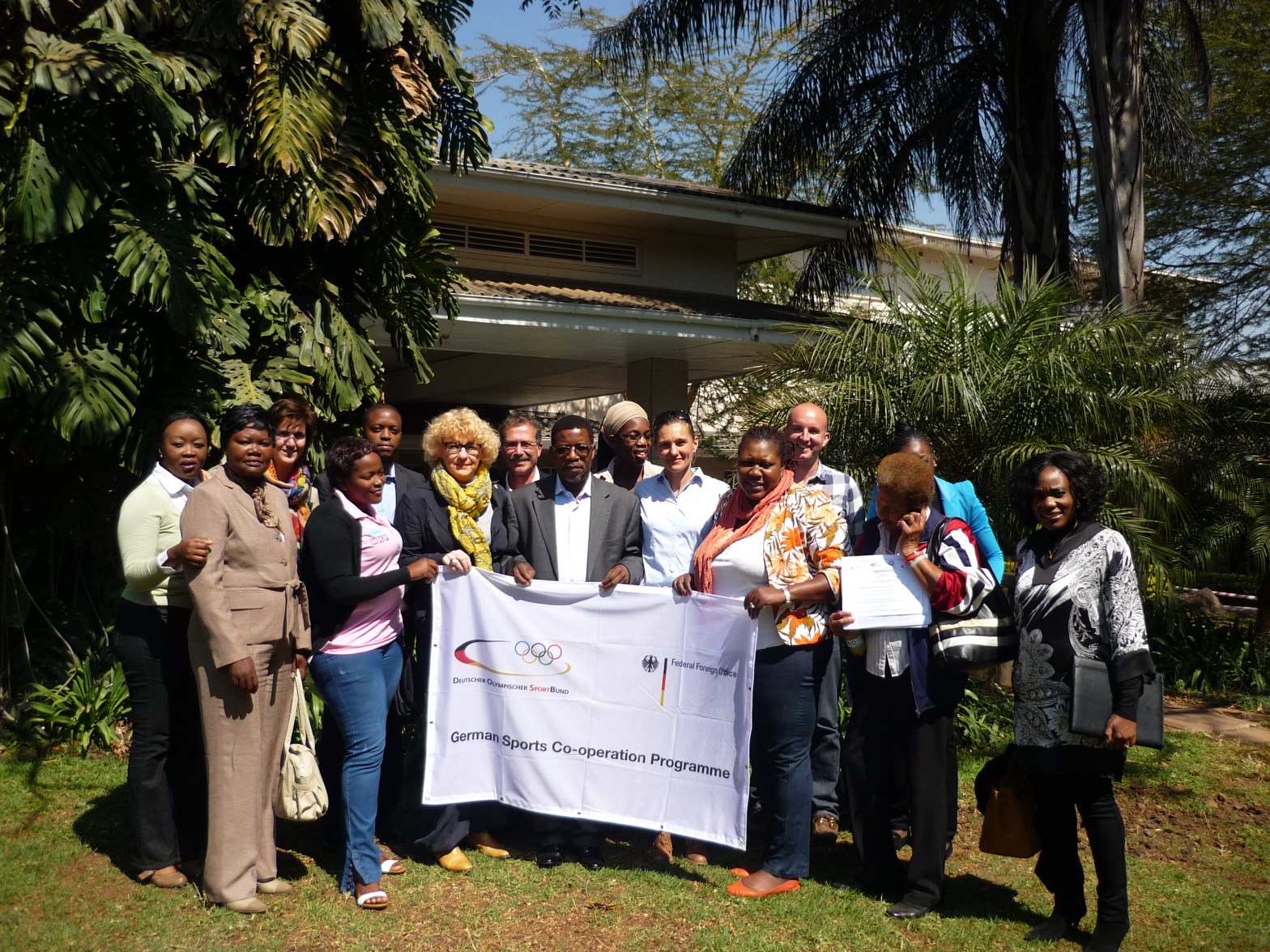
As I mentioned in one of my recent blogs, I have been working in conjunction with the German Foreign Office through their Teutonically entitled ‘Sports Cooperation Programme’. Sorry, that is an unfair (indeed, nonexistent according to spellcheck) adjective, but it rather highlights for me the difference that one hundred years has made in who I am, where I am and what I am doing. Especially in a royal week, the inherent prejudice in my comment would have seemed somewhat unusual to an early Edwardian, certainly to a Victorian, who were only just coming to terms with the rise and rise (and hence rivalry) of their erstwhile protestant friends in the new(ish) Germany.

One of the most prominent ways in which this growing, unnecessary rivalry manifested itself was in the colonial ambitions in Africa. As Captain Blackadder once memorably put it, “the British Empire at present covers a quarter of the globe while the German Empire consists of a small sausage factory in Tanganiki (sic). I hardly think we can be entirely absolved of blame on the imperialistic front”. To which Lieut. George responds, “mad as a bicycle!” Which of course reflects the speed of change in the relationship which came to so comprehensively influence British history, education, football, holidays, adverts, hockey, newspapers, comedy, diet, even the names of our royal family, in the twentieth century.

One hundred years on and I, an Anglo Saxon of course, find myself working and living with Germans in Africa. And loving it. Not only do we share common values and perspectives, we both also obviously care about international development, not least through sport. And this despite some obvious challenges at home. Whilst much of the remainder of Europe, significantly and yet sometimes blissfully irreverently signed up to European union, has spent recent years behaving as if there were no tomorrow, our Teutonic relatives have, I believe, set an example of how to behave fairly and justly within a contract; a trait we British usually like to lay our beach towel on. I see no sign of the other Triple Entente allies here, certainly not for anything other than copper.

Thank you, Ralph, Ursula and Isolde, for letting me be part of your programme, and I hope you can link up more with the symbiotic work that the UK, through DfID and UK Sport, are doing in Zambia, as you have already with the Norwegians here. We share similar ambitions for international development and for sport, both for sport’s sake and for the use of it as an educational tool for those growing up today, with much less than we had. I know we both learnt a lot from the lessons of the twentieth century, and the prognosis for the twenty first century is that our cooperation and understanding is just as important now as it was absent then.

Posted in 2013 (before Brexit)

Alive and Kicking

Wow, what a week. I’ve got about 3-4 blogs in mind but as I have only worked out how to upload one photo at a time (and do not yet know how to add a video – I’m thinking youtube but will have to explore that one later – you’ll just have to wait for the simply sensational church choir practice) I will keep this blog to my visit to a football factory yesterday called Alive and Kicking.

I will forgive the developed nations’ readers of this blog for thinking of a football factory as either a summer sports camp for children or, perhaps, for one or two of you who might have worked on the Olympic torch especially, an automated and mechanical process for producing footballs. This being a developing nation however, I actually mean a couple of rooms where about 50 people work to produce footballs by hand; 3 per day each is the target, 2 the minimum required.

On the same site as a beef factory, which of course supplies some of the raw material, and sitting alongside a shoe factory which also takes some of that same raw material, a team of skilled craftsmen and women cut, brand, stitch and, sometimes, pump up the balls. Silver ones, red ones, standard white ones and, even, hairy cowhide ones, these are then supplied both locally and internationally, including I am pleased to report to an erstwhile London 2012 sponsor in the form of John Lewis.

However, this is more than just a factory (and intelligent use of what otherwise might be waste product). Not only do the balls have to be made of tougher stuff than your usual football in order to survive both many years of use and on the hard grounds of Zambia (and abroad), they are also usually printed with messages used to support the sport for development mantra. By which I mean they use marks such as the ones below which, when the sport ends, are used to provoke thought and discussion amongst the children about all manner of social and health challenges. We use these balls in the Sport in Action programmes and it is also a fairly common CSR activity for various Zambian companies to purchase these balls for schools and communities I am told. Next week, I will get to see the lessons that stem from the use of these balls and hence I will report more then.

I am also designing my own ball(s) to bring back to the UK with various marks on in order to use in the classroom in years to come to educate the children I am teaching about life in Africa. Anyone reading this who might want me to order a ball or two for them, please let me know. Not only will you be helping the Zambian economy, you’ll be getting a football that will outlast you I am sure!

A final thought: I wonder if balls could be created with developmental / subliminal messages for elite footballers too: Reducing greed; Contractual fidelity; and Being a role model should all provoke thought for Messrs Rooney, Cisse and Suarez (to name but a few) I am sure…

Posted in 2013

Zambian Weekend

Work update: we have had some brilliant meetings recently and I only hope that I have the time left to make the most of the opportunities that are apparent here. That is not the reason for this blog though; I want to tell you about my weekend.

Having spent a little of the last few years in the company of various A-C list celebrities and sports stars, I suppose I should not have been surprised to find myself hanging out with the Proflight Fly 5, including local rapper JK and singer Cactus, on Friday night at the Polo Grill in Lusaka. Of course, I was about as familiar with these local stars as I had been when meeting The Wanted or the cast of Eastenders last summer but what was a pleasant surprise was to discover how friendly and approachable they were; it seems the trappings of fame need not necessarily lead to an inflated opinion of oneself. Thank you Paul and Keira Langford-Johnson for inviting me along.

Saturday was then an opportunity to participate, as I have been every Saturday, in the Lusaka Hash House Harrier’s run. Having experienced a fabulous bush run (where my chronic fear of snakes and love of running were set in glorious juxtaposition) and a rather short suburban jog, this week was the opportunity to help celebrate Lusaka’s 100th birthday by completing an urban run taking in the sights, sounds, smells (in fact, every sensory experience) of this sprawling city. Highlights were undoubtedly the Freedom statue (to commemorate independence in 1964) and City Market (experienced as Zambia were busy winning the COSAFA cup on home soil up in the Copperbelt) but some of the other sights really reveal how recently development in Zambia has occurred and how poor the country remains. As I sit in a hotel lobby writing this post, the contrasts are also everywhere.

To top the weekend off, not forgetting the wonderful decision of SuperSport to offer free access to all their sporting channels on the same weekend as Root, Froome, Westwood et al were all excelling, one of my Zambian housemates, a site coordinator at Sport in Action, cooked a traditional Zambian meal last night featuring nshima, beans, cabbage, fish like whitebait and other local ingredients. Of course, it was food so I was always going to be in my element but I really did enjoy it and could get used to the local cuisine; I hope to bring a few ideas home with me to the UK in August. One thing I won’t be bringing back however is the local custom to eat without cutlery, preferring hands only instead. Whichever Brit, European or whoever invented cutlery (by which I mean a knife, fork and spoon and not, for instance, equally ridiculous implements such as chopsticks) did the world a huge favour and the quicker all nations realise the significance of this invention the better. Anyway, thank you very much Sammy for a lovely meal and I look forward to introducing you to roast beef and all the trimmings next weekend.

Right, back to work (rather randomly with the German Foreign Office for the next couple of hours)… 

Sammy Thaimu: Hey, Thank you very much, Mark. This is so great to read your blog. You know what you are: a star… looking forward to a roasted beef meal this weekend…

Nicola Davidson: What a great post. Fantastic to hear you’re making the most of your time in Zambia (not that I would expect anything less) in the both the sporting and culinary arena. Don’t forget the Yorkshire pudding next weekend.

Posted in 2013

Touring the schools

Having reluctantly dragged myself away from the bike ride to Livingstone with Beyond Ourselves on Tuesday evening (via a very friendly Lusaka farmer who rather randomly purchased a live cockerel on our way back to the city, placing it noisily in the boot), I am pleased to report that my reason for doing so was well and truly worth it.

Yesterday, along with the latest group of UK students here with the IDEALS programme (International Development through Excellence And Leadership in Sport), and a few others working with UK Sport or with one of the Wallace Group of universities, we visited a variety of the schools in and around Lusaka where Sport in Action runs programmes. Each area, from Chilenje (near where I live) to Munali to Kalingalinga, has its own character and personality and the children reacted in different ways in each place. Whilst I am sure some of the children have grown used to it over the years of the programme, the arrival or a truck full of mzungos at each site, sporting varying degrees of sunburn and choice of sunshade, must still be an extremely odd site. Nevertheless, we were extremely warmly greeted everywhere we went and it was not unusual to see the students carrying more than one young child or becoming immersed in an impromptu game of football or basketball. The only difficult thing was dragging ourselves away from each site in order to go onto the next one.

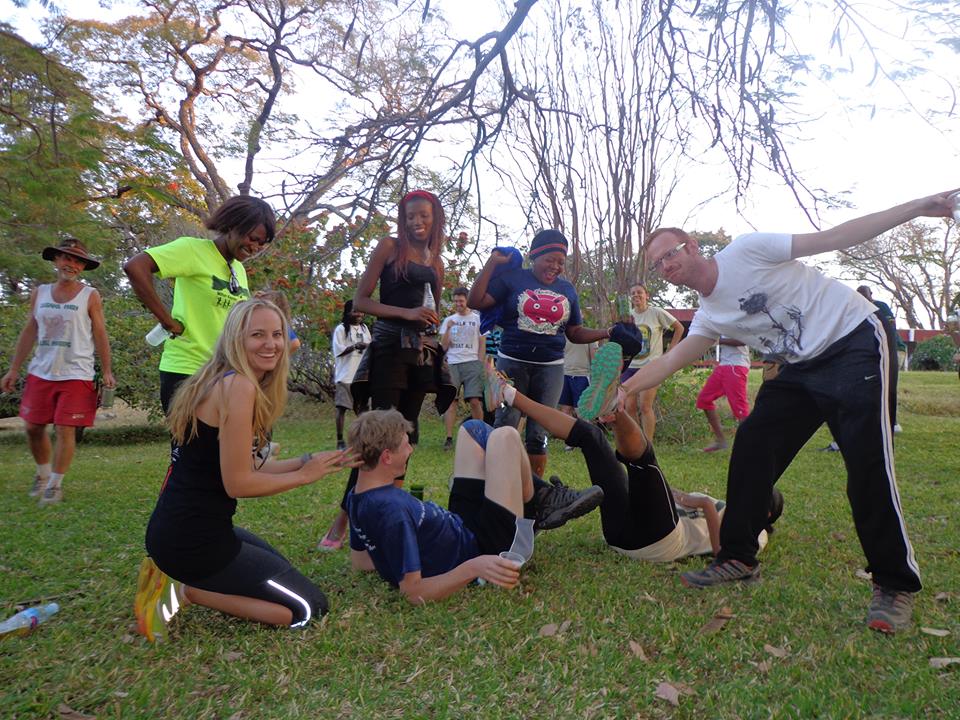
There was a serious purpose for the day of course, which was to familiarise the students with where they will be working for the next five weeks. Having already met their site coordinators and peer leaders from each site on Monday, and then experienced the ‘Tackle Africa’ workshop on Tuesday (which I was disappointed to miss whilst on the bike), this was their first opportunity to see the schools and meet the children. Judging by the way they got stuck in immediately and the buzz on the truck as we approached or after we left each site, I am sure group 2 will pick up seamlessly from where group 1 left off. The picture below is just one example of a very common sight yesterday.

Posted in 2013

Researching the opportunities

I have now been here for three weeks and I am pleased to report the serious work is now in full swing. Last week saw the first meetings with companies which have already led to a couple of opportunities which we need to follow up on. That said, other companies have told us they can’t help but at least we now know that and understand their reasons, all of which is helpful.

Today saw our first discussion at Sport in Action about the types of value we are seeking (i.e. not just cash, although that is always nice to have of course!) and the types of value we can offer in return. Lots to document and turn into proposals in the next few days. Plans for the workshop with the Zambian National Olympic Committee and various national federations are also in full swing.

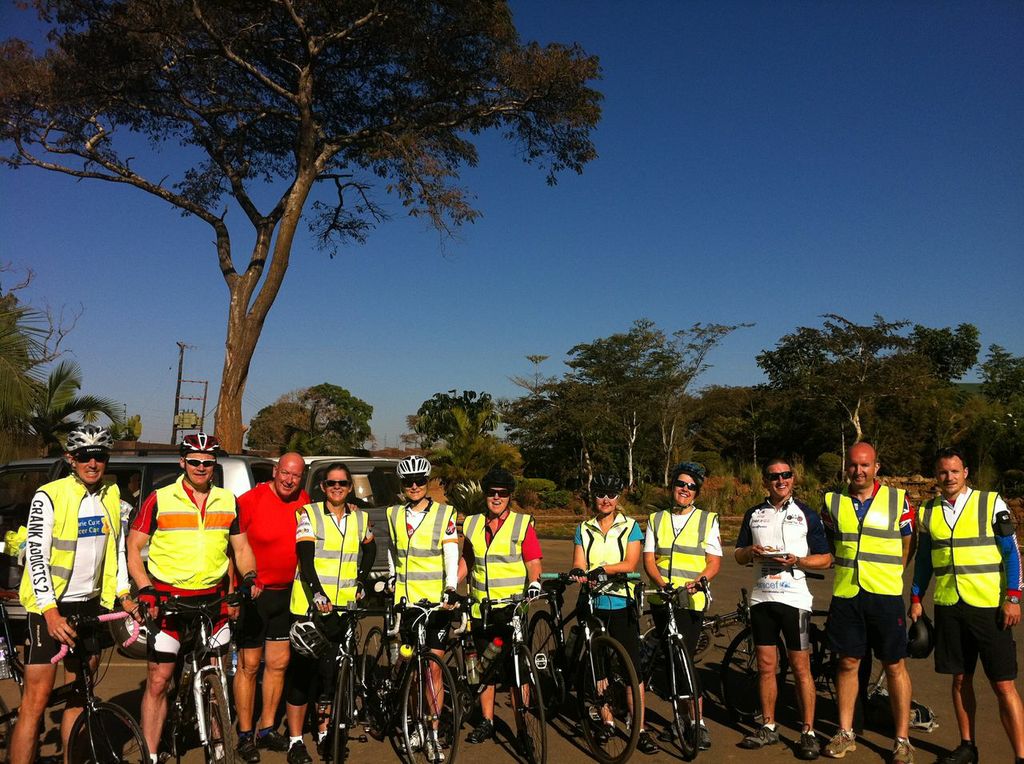
All of which means I have had to decline (most of) the exciting opportunity to cycle from Lusaka to Livingstone this week – all 450km of it at an average altitude of 1km. Whilst it is hardly Mont de Ventoux, I have managed to find time to do the first day tomorrow down to a place called Munali Heights, a distance of about 90km. There is a group of 12 riders mostly from the UK riding for a charity called Beyond Ourselves and, with my new Zam Bike (more of which in a future blog), I am thoroughly looking forward to the outing. Fingers crossed I can make it back to Lusaka tomorrow night on the bus…

Posted in 2013